


You will not be allowed to compare more than 4 products at a time
View compareHamburg Amalgam Plugger /condensors 1.20-1.25 Serrated
Hamburg Amalgam Plugger /condensors 1.20-1.25 Serrated
Regular price
£6.99 GBP
Sale price
£6.99 GBP
Regular price
Unit price
per
Tax included.
Estimated delivery: 5-7 Days from order date.
Free Shipping & Returns: On orders above $79


Description
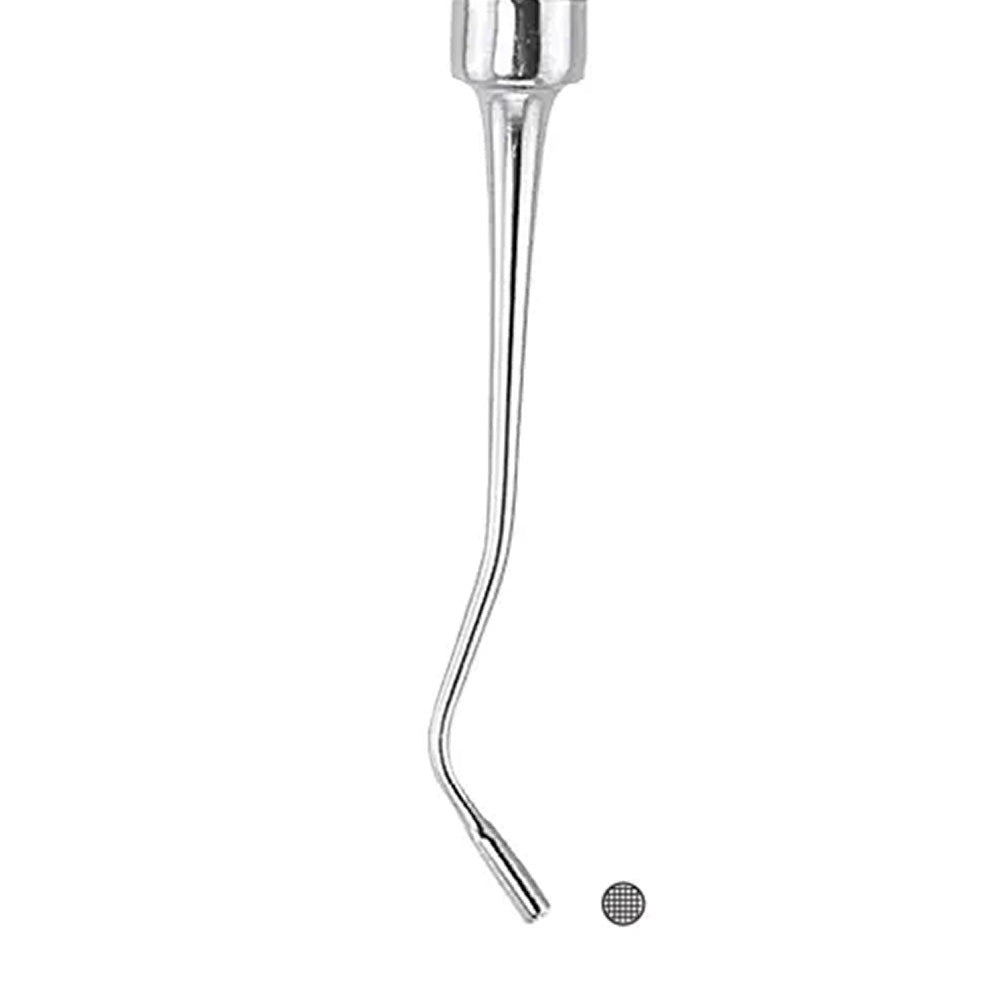
The Hamburg Amalgam Plugger / Condenser is a high‑precision restorative instrument designed for dense, controlled condensation of dental amalgam in Class I, II, and complex cavity preparations. With dual serrated working ends (1.20 mm & 1.25 mm), it ensures superior mechanical interlocking with amalgam, preventing slippage and enabling firm compaction in both shallow and deep cavity areas.
Key Features
-
Dual Serrated Tips — 1.20 mm and 1.25 mm ends for versatile condensation in different cavity sizes.
-
Hamburg Pattern Handle — Lightweight, ergonomic, and provides excellent tactile sensitivity.
-
High‑Grade Stainless Steel — Rust‑free, corrosion‑resistant, and fully autoclavable.
-
Enhanced Grip Serrations — Prevent amalgam displacement and improve condensation efficiency.
-
Precision‑Machined Ends — Ensures uniform pressure distribution during packing.
Specifications
-
Instrument Type: Amalgam Plugger / Condenser
-
Working Ends: 1.20 mm (serrated) & 1.25 mm (serrated)
-
Material: Premium Stainless Steel
-
Design: Double‑ended
-
Surface Finish: Polished, easy‑clean
-
Sterilisation: Autoclavable at standard dental sterilisation cycles
Technical, step‑by‑step clinical guide for correct and efficient use.
-
Verify cavity walls and floors are clean and dry
-
Remove debris and moisture before condensation
-
Ensure matrix band and wedge are properly placed for Class II restorations
Place Initial Amalgam Increment
Introduce the first portion of amalgam into the cavity.
-
Carry freshly mixed amalgam using an amalgam carrier
-
Deposit small increments to avoid voids
-
Begin condensation immediately while amalgam is still plastic
Condense Using the 1.20 mm Serrated End
RecommendedUse the smaller tip for initial compaction and adaptation to internal line angles.
-
Apply firm vertical pressure to pack amalgam into internal corners
-
Use overlapping strokes to eliminate internal voids
-
Maintain consistent pressure for uniform density
Switch to the 1.25 mm Serrated End
Use the larger tip for broader surface condensation and deeper compaction.
-
Condense horizontally and vertically to ensure full adaptation
-
Build up the restoration incrementally
-
Maintain serrated tip contact to prevent slippage
Final Surface Condensation
Achieve a dense, well‑adapted amalgam surface before carving.
-
Apply firm strokes across the entire occlusal surface
-
Ensure no voids or soft spots remain
-
Prepare the surface for carving and anatomical shaping
Clean and Sterilise the Instrument
WarningProper cleaning ensures longevity and infection control.
-
Rinse immediately after use to prevent material hardening
-
Use ultrasonic cleaning if available
-
Autoclave according to standard dental sterilisation protocols